Taylor Swift Eras Tour: Under-Seat DOT
256 units, $400K of capital, a US-to-Canada supply chain, three days before showtime. The Toronto night set a single-event data record on Rogers' network, and Vancouver broke it.
- Role
- Owner: trade study, capital, delivery
- Venues
- Rogers Centre · BC Place
- Capex
- $400K (under-seat DOT)
- Outcome
- 7.4 TB Toronto, 11+ TB Vancouver
7.4 TB
Toronto single-event record
256
Under-seat DOT units
3×
Stadium capacity added
$400K
Capital allocated
Context
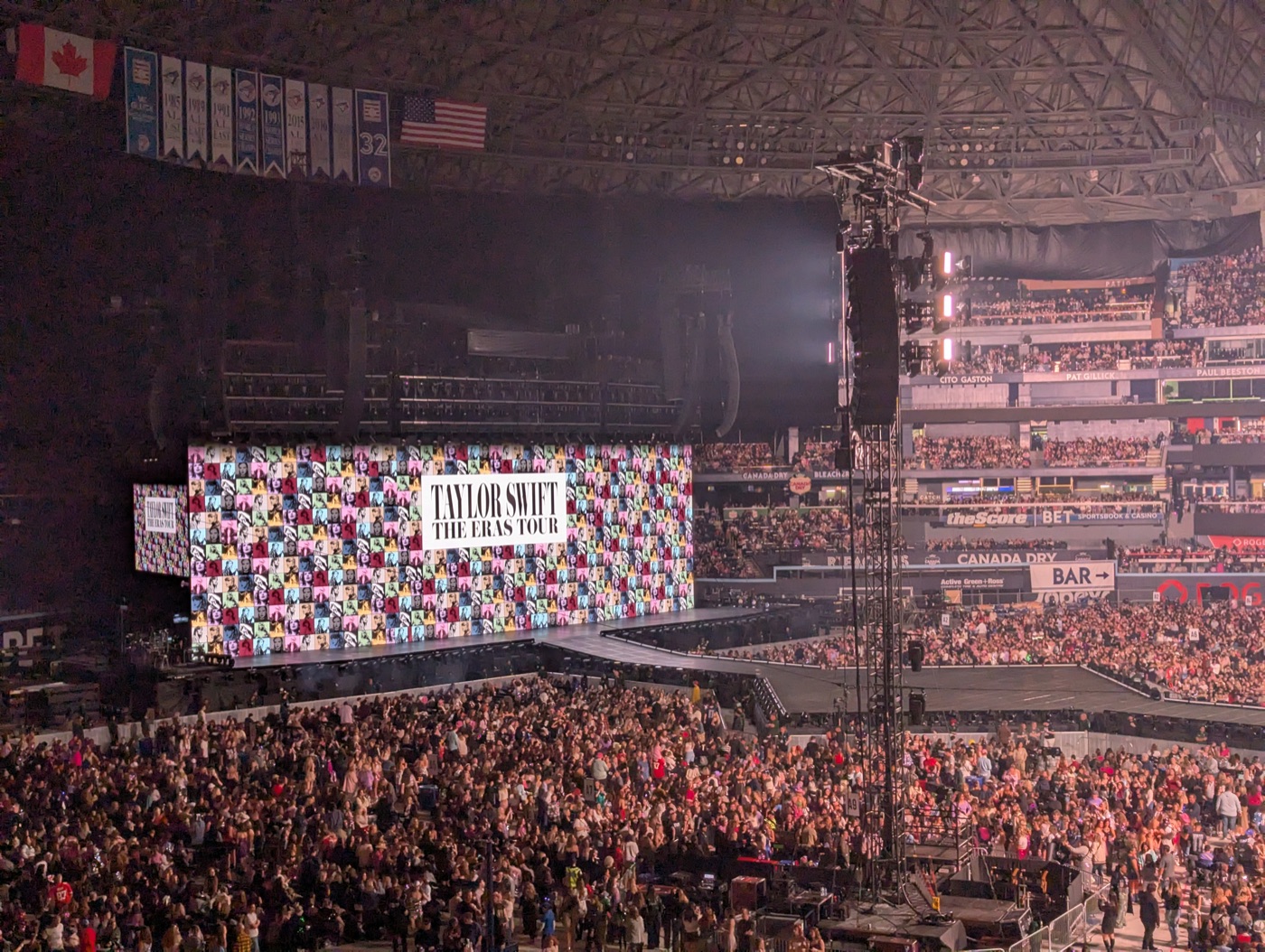
A stadium designed for crowds, not 5G.
Stadium roofs are great for sightlines and terrible for radio. Macro signal collapses the moment 50,000 fans walk in, and overhead antennas cannot reliably reach seats wedged under concrete. The Eras Tour was the highest-profile network test Rogers had ever faced, and "good enough" was not going to be acceptable.
Decision
Ericsson DOT vs Crossfire BTI: a trade study.
I led the trade study comparing Ericsson DOT against Crossfire BTI for under-seat deployment. The decision rested on three axes: thermal behavior in an enclosed seat cavity, Safety Code 6 RF exposure compliance with humans literally sitting on top of the radio, and supply-chain certainty inside the window.
Ericsson DOT won on compliance and on the thermal envelope. I specced a custom enclosure for the under-seat mount and defended the $400K capex allocation.
Execution
A US-to-Canada supply chain on a 3-day buffer.
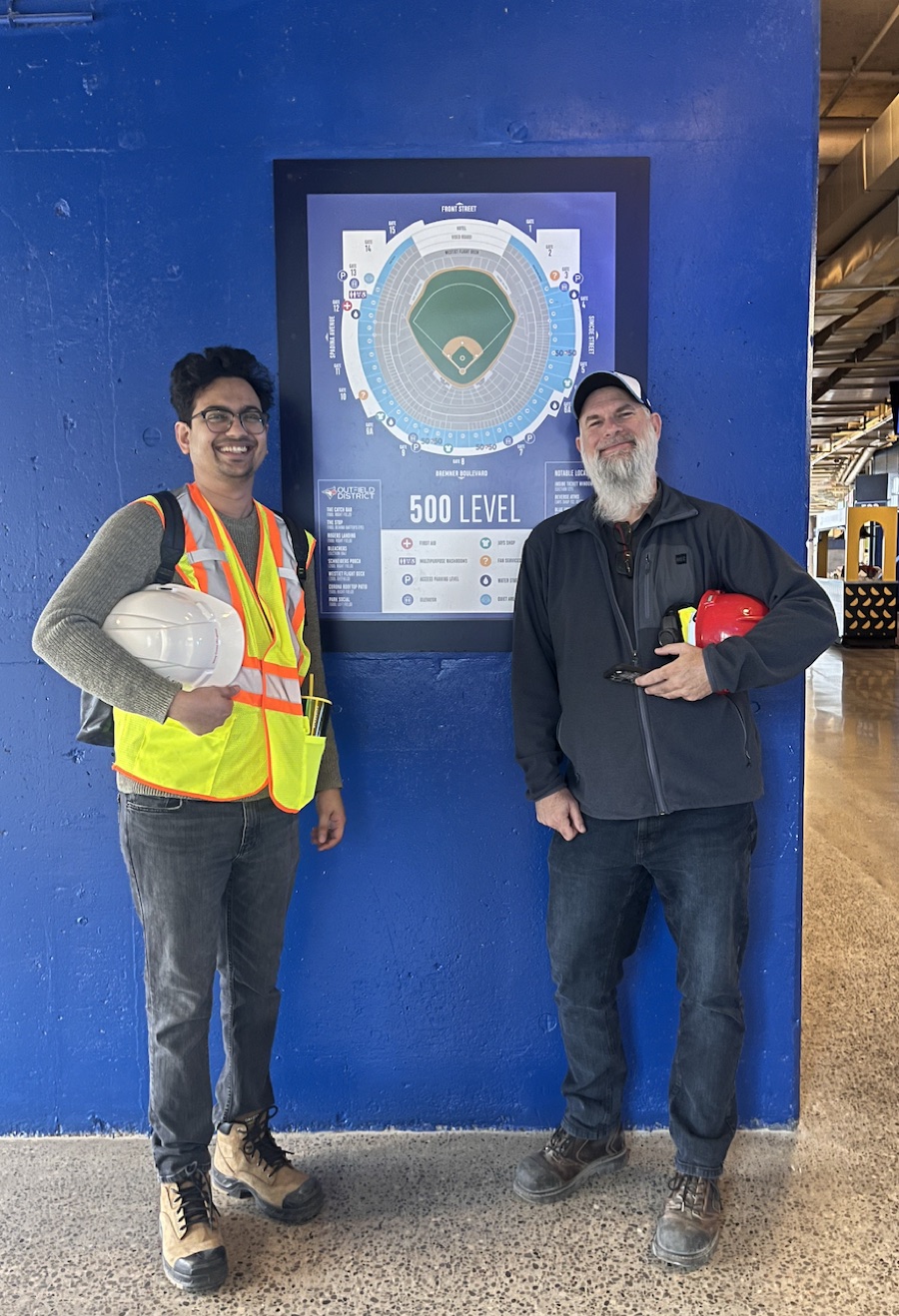
The 256 units shipped from the US into a customs and logistics pipeline that did not exist as a template. I built it. The last unit was installed three days before the first Toronto show, and we staged the same configuration at BC Place.
The network
What it took to hold 50,000 phones.
The under-seat DOT sat inside a full in-stadium redesign. Rogers and Ericsson deployed the Ericsson Radio Dot System with Massive MIMO and lightweight antenna-integrated radios, tuned with uplink carrier aggregation for the upload bursts that hit when fans all post at once, and beamforming to serve thousands of users simultaneously. The system supports 50,000+ concurrent connections at multi-gigabit throughput.
At Rogers Centre, the build was an $8M investment that tripled network capacity, roughly the coverage of 33 downtown Toronto towers in a single venue. Vancouver's BC Place went further: a $10M program that lifted 5G capacity 38×, the equivalent of 20 Vancouver towers, with two temporary cells on wheels outside the venue.
Outcome
A record, then a bigger one.
Taylor Swift's Toronto opening night (November 21, 2024) moved 7.4 TB of mobile data across Rogers 5G and LTE, a single-event record at Rogers Centre. Across all six Toronto shows the network carried roughly 42 TB, more traffic every night than any other event at the venue.
Then Vancouver topped it: 11+ TB in a single night at BC Place and 32 TB across three shows. Destination Toronto projected over $282M in economic impact from the six Toronto dates. The deployment cleared the regulator and held performance across every night of the run.